
 English
 中文简体
中文简体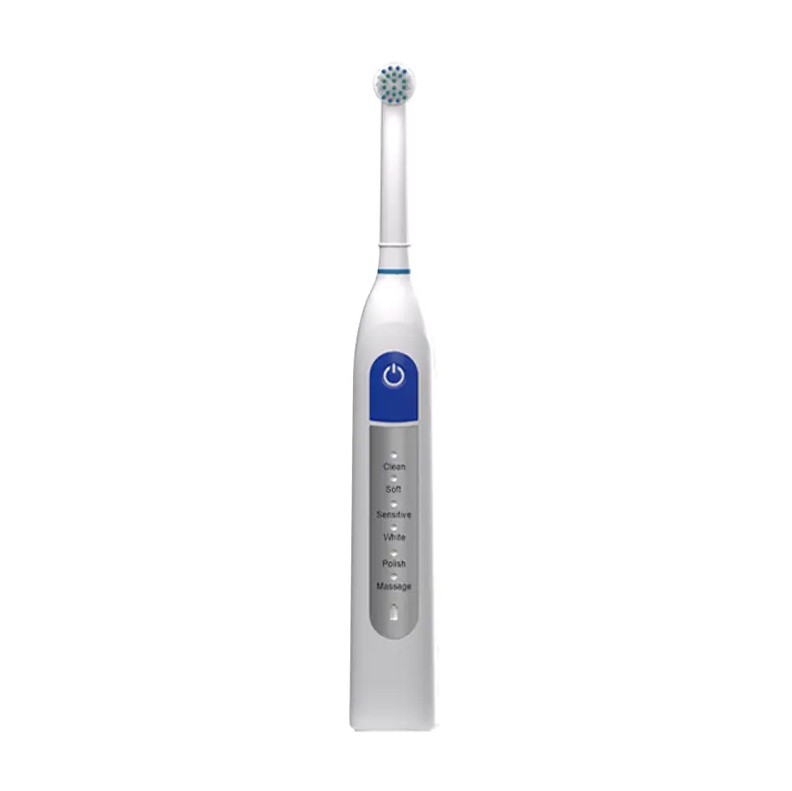
Phone:+86-13952799285
No dental hygienist asks a patient to brush harder. Most adults who switch to an electric toothbrush with an oscillating head do it for one reason: they want plaque off the teeth without scrubbing at them. That expectation holds up. A small round head turns back and forth in short arcs several thousand times a minute, so the bristles sweep the same spot many times before you move on, which is more strokes per tooth than a wrist can deliver.
The catch is that oscillation alone does not guarantee comfort or a long service life. Head diameter, bristle trimming, shaft sealing, and the price of replacement heads decide whether the brush still feels worth using six months later. Those four points are covered below, in the order a buyer should think about them.
Content
- 1 Why a Round Oscillating Head Cleans Differently
- 2 Oscillating Head versus Sonic Head: Where the Difference Shows Up
- 3 What to Check Before You Buy
- 4 Battery or Rechargeable: Match the Power Source to the Routine
- 5 Sealing, Storage, and the Bathroom Environment
- 6 The Running Costs Nobody Mentions at Checkout
Why a Round Oscillating Head Cleans Differently
An oscillating head is a circle rather than a rectangle, and that shape is the point. The head rotates a few degrees one way and then a few degrees back, so the bristle tips stay in contact with the enamel and travel in short arcs instead of long strokes. Adult models in this category are usually rated between 2,500 and 7,500 oscillations per minute. Manufacturers publish figures such as 6,000 oscillations per minute for rechargeable adult handles, often paired with a light vibration that helps lift plaque along the gum line.
Because the motion is small, technique stays simple. You place the head against a tooth, hold it briefly, and walk it along the arch. You do not scrub, and the two minute timer that most handles carry exists mainly to stop users from rushing that walk.
The limits are mechanical rather than electrical. A head wider than about 12 millimeters struggles behind the last molars, and a worn head with splayed bristles removes far less plaque than a fresh one no matter how fast the motor turns. Readers who want the longer version of this category can start with this explanation of oscillating rechargeable electric toothbrushes.
Oscillating Head versus Sonic Head: Where the Difference Shows Up
Both designs remove more plaque than a manual brush for most adults, so the choice comes down to feel and to how much attention you want to give each tooth.
| Point of comparison | Oscillating head | Sonic head |
|---|---|---|
| Motion | Round head turns back and forth in short arcs | Bristles vibrate side to side at high frequency |
| Typical speed | 2,500 to 7,500 oscillations per minute | 20,000 to 40,000 vibrations per minute |
| Technique | Hold on each tooth, no scrubbing | Sweep slowly along the gum line |
| Feel | Firmer, with more contact on each tooth | Lighter, closer to a tingle |
| Often chosen by | Users who want a defined clean tooth by tooth | Users with sensitive gums or fixed braces |
Speed figures are not a scoreboard. A sonic brush vibrating 33,000 times a minute and an oscillating brush making 6,000 short strokes a minute are doing different jobs, and either can leave a clean surface behind when the head reaches the gum line and the user gives it time.
What to Check Before You Buy
Head diameter and shape
Ask how much room sits behind your last molar. If a head is wider than roughly 12 millimeters, it tends to ride over the back teeth instead of onto them. Round heads in the 10 to 12 millimeter range are the practical compromise between coverage and reach, and a slightly cupped bristle profile helps the tips wrap the gum line.
Bristle trim and stiffness
Soft bristles with rounded ends are the safe default for daily use, especially for anyone whose gums bleed. Trim matters as much as stiffness. Wavy or angled tufts follow the curve of the tooth and clean the sulcus, the shallow groove where the tooth meets the gum, better than a flat block of evenly cut bristles. Hard bristles combined with heavy pressure remain the usual causes of enamel wear and gum recession.
Timer, pressure feedback, and cleaning modes
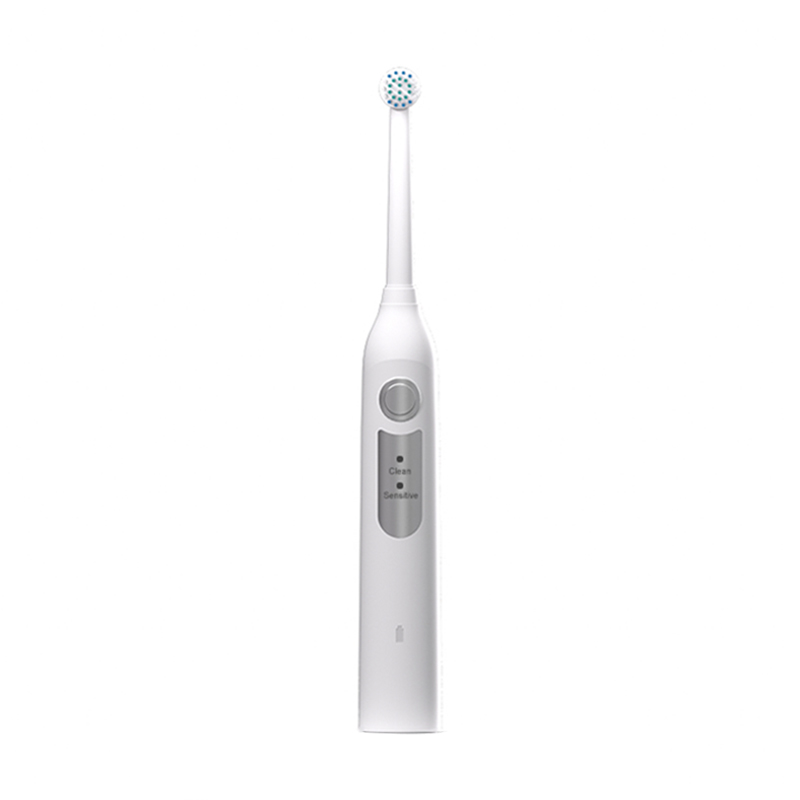
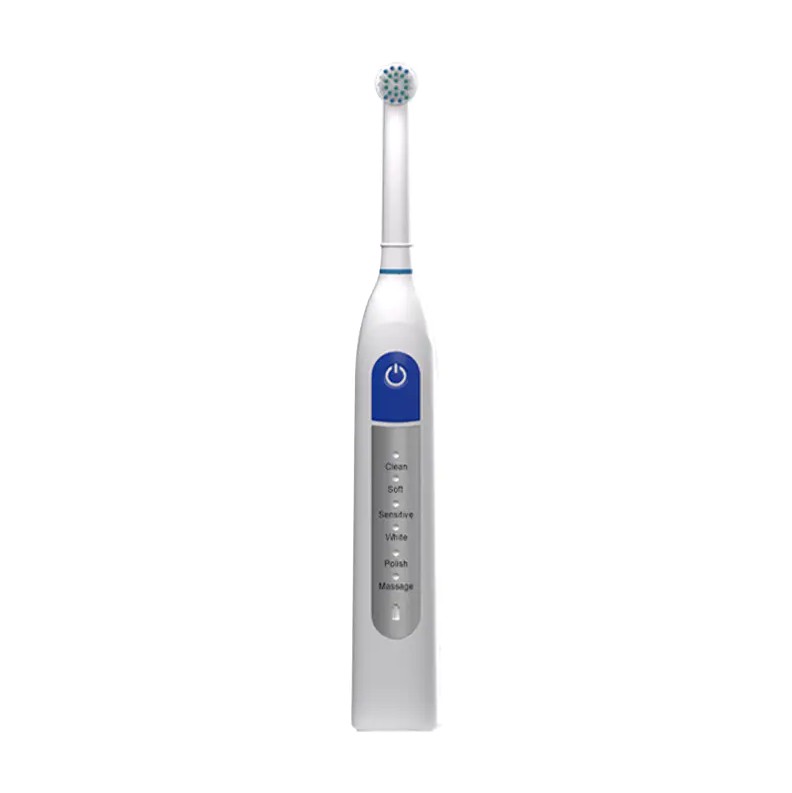
A two minute timer with a pause every 30 seconds is the baseline. A pressure sensor that slows or stops the motor when you push too hard is worth paying for if your gums have started to recede. Cleaning modes sit lower on the list, because most people settle on one mode within a month. A deep cleaning oscillating model with intelligent timing, for example, pairs a two minute timer with a pressure aware shaft and a round head.
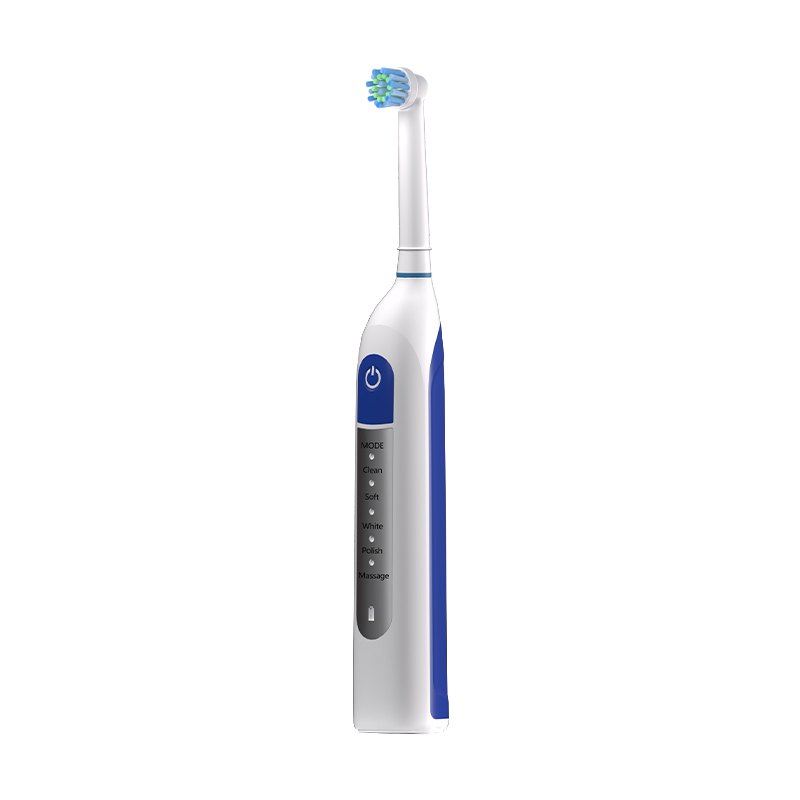 ALB-910-6 Rechargeable Oscillating Toothbrush with Smart TimingA rechargeable IPX7 oscillating brush with 30-second reminders, 2-minute timer, six modes, and inductive charging for daily deep-cleaning routines.View Product →
Battery or Rechargeable: Match the Power Source to the Routine
Battery handles are lighter, need no dock, and cost less up front. They trade sealing and service life for that convenience. Most carry an IPX4 rating, which resists splashes but not immersion, and the cells cannot be replaced once they fade. That is fine for a travel bag or a second bathroom.
Rechargeable handles are sealed more thoroughly, often to IPX7, and typically run for two to three weeks per charge. They also hold their speed as the battery drains, while a weak cell in a cheaper handle can slow the head to a fraction of its rated oscillation. For twice daily brushing at home, the rechargeable route usually costs less over three years once you count batteries.
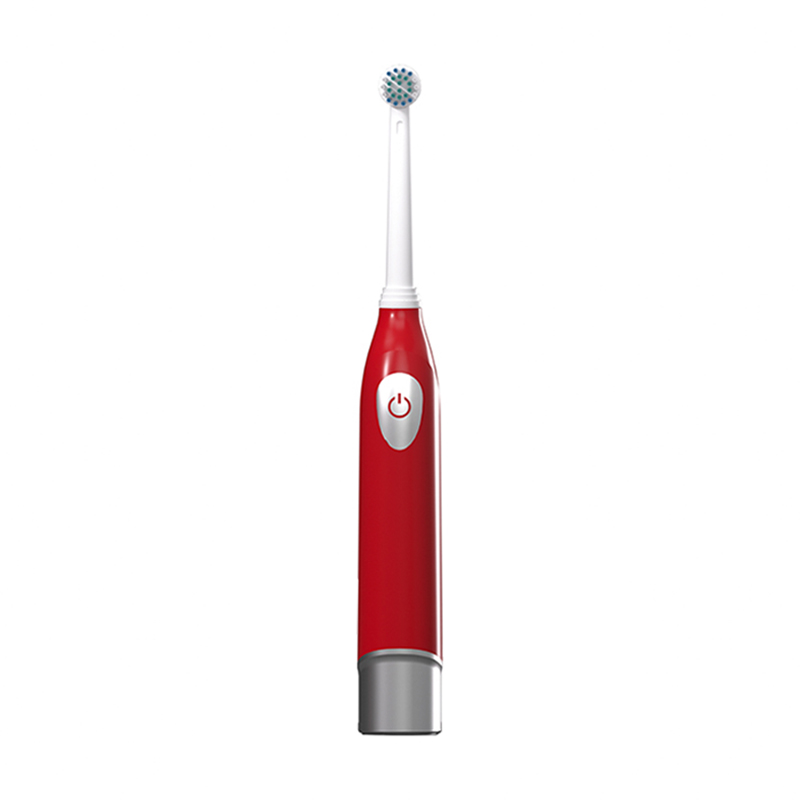
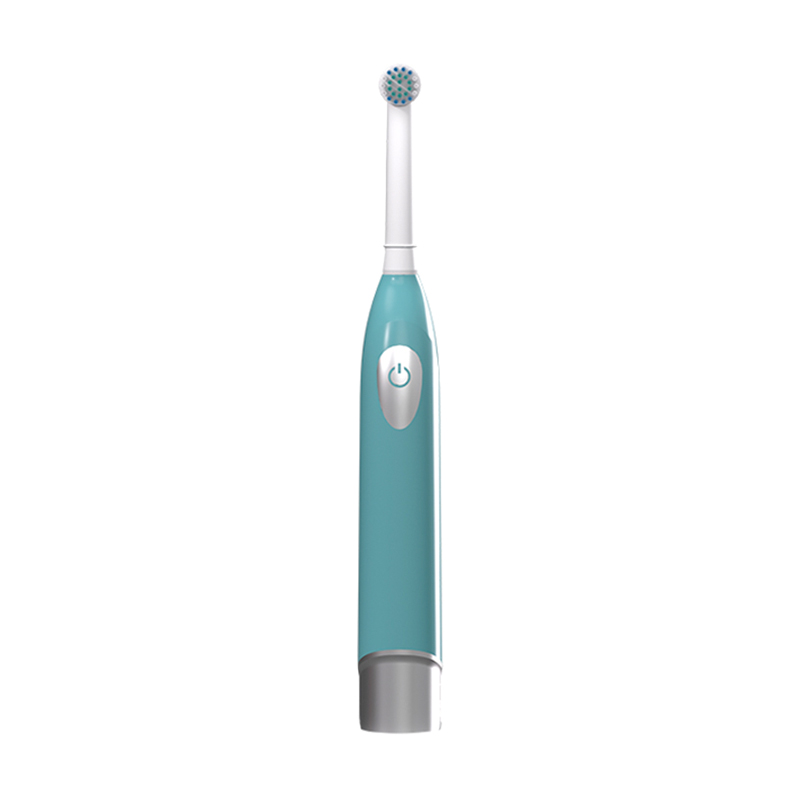
A battery powered round head rotary model with an IPX4 rating suits a spare bathroom or a gym bag, where a charger would be one more thing to remember.
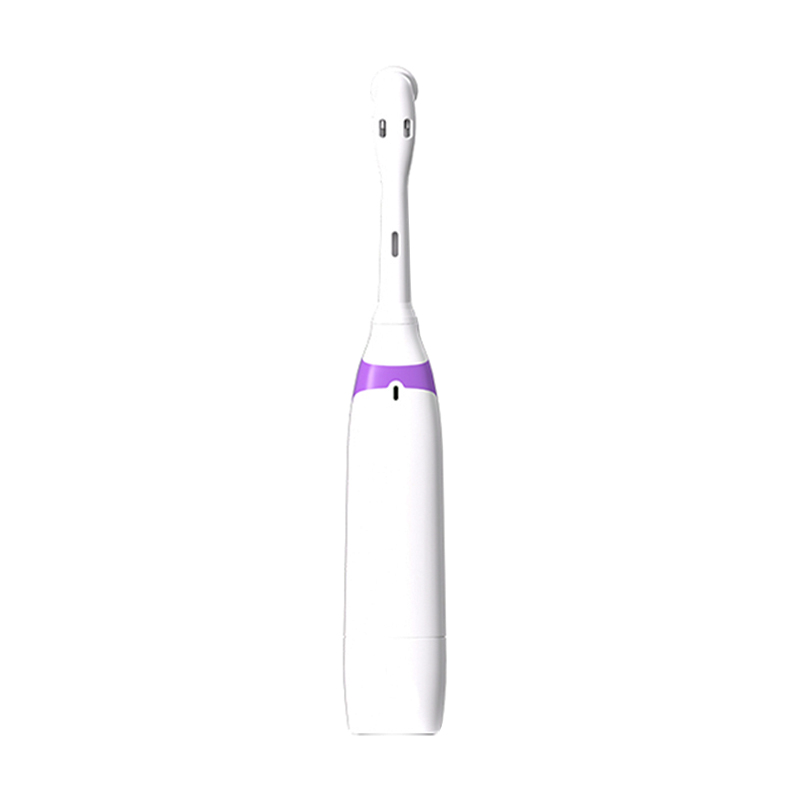 ALB-3025 Battery-Powered Round Head Rotary ToothbrushA battery-powered IPX4 rotary brush with 6,000 vibrations per minute, AAA power, and about 20 days of use for spare or gym-bag routines.View Product →
Sealing, Storage, and the Bathroom Environment
An oscillating head sits on a shaft that moves, and the seal around that shaft is where inexpensive brushes fail. Water creeps past the seal, the motor corrodes, and the handle starts to slow or stutter. Look for a stated IPX7 rating if the brush lives on a wet counter or gets rinsed under the tap.
Storage matters too. A brush left standing in a closed cup keeps the head damp for hours, and damp bristles are a friendlier place for bacteria than dry ones. Shake the head, stand it upright in open air, and replace it every three months.
For a wet counter, a rechargeable handle rated IPX7 with a smart brushing reminder covers the seal and the habit side of the problem at once.
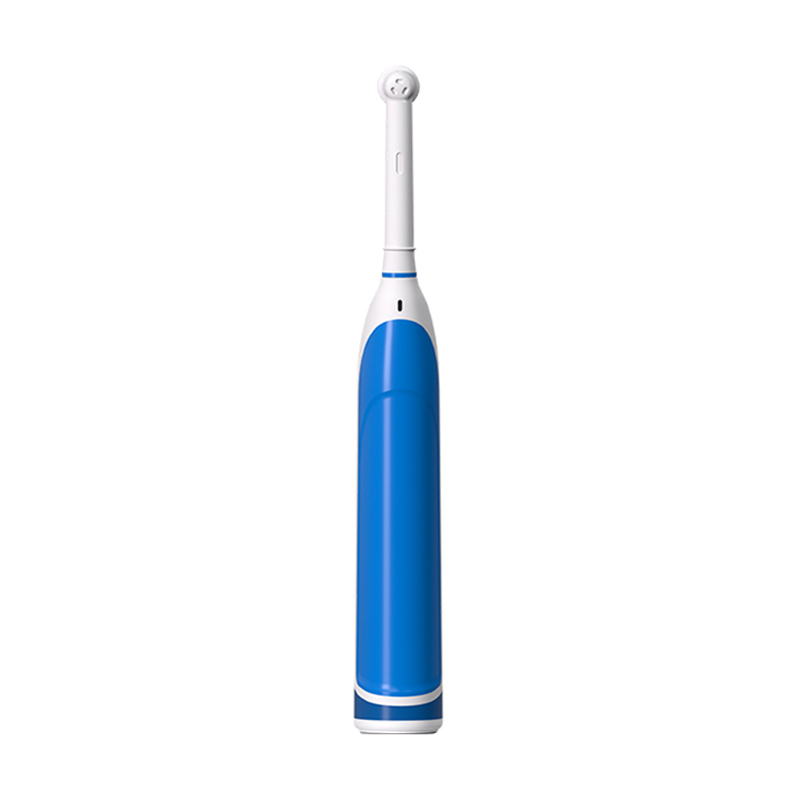 ALB-920 IPX7 Rechargeable Oscillating Toothbrush with Smart ReminderA rechargeable IPX7 oscillating brush for wet-counter use with smart reminders; check replacement-head cost and supply before buying.View Product →
The Running Costs Nobody Mentions at Checkout
The handle is a one time purchase. The heads are not. Two adults brushing twice a day get through about eight heads a year, so a head that costs twice as much adds up quickly. Check the price and the supply of replacement heads before buying the handle, not after.
Compatibility is the other trap. Heads are rarely interchangeable between models, and some brands retire a head design while the handle still works. A maker that also produces manual toothbrushes and takes part in drafting national electric toothbrush standards tends to keep spares in production longer, which is the practical reason to review the full range before committing.
An oscillating head is the right choice if you want plaque removed with the least amount of wrist work and you are willing to move tooth by tooth for two minutes. It is the wrong choice in a few specific situations.
- Gums that bleed or sting when a firm brush touches them.
- A mouth too narrow for a round head to reach the back molars.
- Replacement heads that are hard to find or priced high for the model you like.
If the decision comes down to two or three models, compare them on head diameter, bristle trim, seal rating, and the three year cost of heads. Those four numbers predict satisfaction better than any mode count or motor specification printed on the box. Aolbea, a Ningbo based oral care manufacturer that has been producing toothbrushes since 1986 and took part in drafting the national standard for electric toothbrushes, lists these details for each of its oscillating models.