
 English
 中文简体
中文简体
Phone:+86-13952799285
The primary advantage of a sonic electric toothbrush is its ability to clean more thoroughly than a manual brush by generating up to 30,000 to 40,000 brush strokes per minute — compared to roughly 300 strokes per minute achievable by hand. This high-frequency vibration creates a dynamic fluid action in the mouth that drives toothpaste and saliva into interdental spaces and along the gumline, cleaning areas the bristles themselves never physically touch.
Clinical research consistently shows that sonic toothbrushes reduce plaque by 21% more than manual toothbrushes and reduce gingivitis markers by up to 11% more after 12 weeks of regular use — measurable outcomes that make the upgrade clinically meaningful, not just marginally convenient.
Content
- 1 Advantage 1: Fluid Cleaning Force Reaches Where Bristles Cannot
- 2 Advantage 2: More Complete Plaque Removal on All Tooth Surfaces
- 3 Advantage 3: Gentle Stain Polishing and Visible Whitening
- 4 Advantage 4: Improved Gum Health and Reduced Recession Risk
- 5 Advantage 5: Built-In Features That Improve Brushing Habits
- 6 Sonic vs. Manual vs. Standard Electric: A Comparison
- 7 Who Benefits Most from a Sonic Electric Toothbrush
Advantage 1: Fluid Cleaning Force Reaches Where Bristles Cannot
When a sonic toothbrush head vibrates at high frequency, it generates a powerful hydraulic cleaning effect in the fluid surrounding the teeth. This fluid cleaning force propels toothpaste foam and saliva into interdental gaps, the gum pocket between tooth and gum tissue, and molar surfaces that bristles cannot physically access during normal brushing motion.
Research indicates that this fluid dynamic effect extends the effective cleaning zone up to 4 mm beyond the bristle tips — covering the subgingival zone where periodontal disease originates. No manual brushing technique, however skilled, can replicate this physics-driven effect. The toothpaste foam's bursting impact under high-frequency vibration also reaches tiny uneven places on the tooth surface that bristles pass over without contact.
Advantage 2: More Complete Plaque Removal on All Tooth Surfaces
The combined action of physical bristle contact and hydrodynamic fluid movement disrupts and removes plaque biofilm across all tooth surfaces — including the gumline, posterior molars, lingual surfaces, and the microscopic pits and fissures of enamel where plaque accumulates and hardens into tartar if left undisturbed.
Because the vibration does the cleaning work rather than manual scrubbing pressure, users do not need to apply the excessive force that commonly causes enamel abrasion and gum recession with manual brushes. Sonic brushes achieve superior cleaning at lower contact pressure — recommended at 150 to 200 grams of force, versus the 400 grams or more that many people unknowingly apply when brushing by hand.
Advantage 3: Gentle Stain Polishing and Visible Whitening
The rapid micro-vibrations of sonic bristles gently polish extrinsic tooth stains — surface discoloration from coffee, tea, red wine, and tobacco — more effectively than manual brushing without requiring abrasive whitening toothpaste. The cleaning action breaks up stain molecules and removes them through fluid dynamics rather than mechanical abrasion, protecting enamel integrity over the long term.
Users who switch from manual to sonic brushing commonly report visible whitening improvements within 2 to 4 weeks of consistent use, attributed primarily to more thorough stain removal rather than any bleaching chemical.
Advantage 4: Improved Gum Health and Reduced Recession Risk
Gingival recession — the gradual pulling back of gum tissue — is frequently caused by aggressive manual brushing. Sonic toothbrushes address this problem on two levels:
- Pressure warning systems: Most sonic brushes include a built-in pressure sensor that alerts the user when brushing force exceeds the safe threshold — eliminating the abrasive scrubbing habit that damages gum tissue over years of manual brushing.
- Soft bristle effectiveness: Sonic brush heads clean effectively through vibration frequency rather than mechanical pressure, making soft or extra-soft bristles sufficient — compatible with sensitive or receding gum tissue that harder manual bristles would further damage.
With consistent use, many users see measurable improvement in gum bleeding and inflammation within 4 to 8 weeks, as the improved cleaning removes the bacterial plaque that drives gingivitis.
Advantage 5: Built-In Features That Improve Brushing Habits
Beyond cleaning performance, sonic electric toothbrushes include practical features that address the most common brushing mistakes:
- Built-in 2-minute timer: Most models include a timer that ensures users brush for the dentist-recommended two minutes — studies show the average manual brusher stops at 45 seconds, missing nearly two-thirds of the recommended cleaning time.
- Quadrant pacing: A 30-second interval signal prompts the user to move to the next quadrant of the mouth, ensuring all four zones receive equal attention rather than over-brushing front teeth while neglecting rear molars.
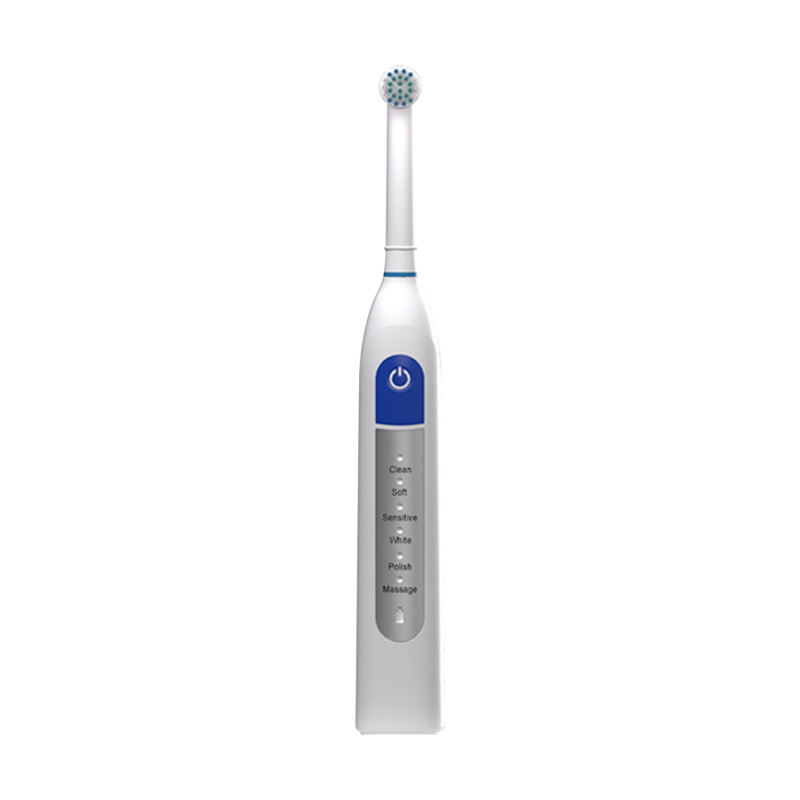
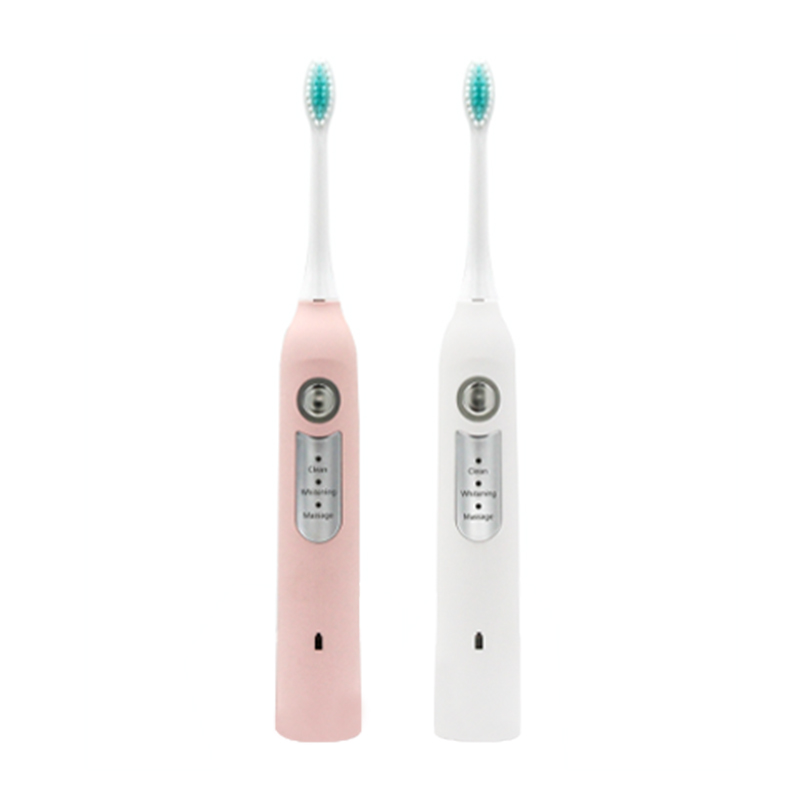
- Multiple brushing modes: Sensitivity, whitening, gum care, and deep clean modes allow the brush intensity to be matched to the user's current oral health needs — a flexibility manual brushing cannot offer.
Sonic vs. Manual vs. Standard Electric: A Comparison
| Criteria | Manual Toothbrush | Standard Electric | Sonic Electric |
|---|---|---|---|
| Strokes per minute | ~300 | ~2,500–7,500 | 30,000–40,000 |
| Interdental cleaning | Bristles only | Bristles only | Bristles + fluid action |
| Subgingival reach | Limited | Limited | Up to 4mm beyond bristle tips |
| Pressure control | User-dependent | Some models | Sensor standard on most models |
| Stain removal | Moderate | Good | Very good (fluid polishing) |
| Suitable for sensitive gums | Depends on technique | Yes | Yes (with sensitivity mode) |
Who Benefits Most from a Sonic Electric Toothbrush
- People with a history of gum disease or gingivitis — the enhanced gumline and subgingival cleaning directly addresses the bacterial buildup that drives gum inflammation.
- Orthodontic patients with braces or retainers — the fluid cleaning action reaches around brackets and wires where manual bristle access is severely restricted.
- People with limited dexterity — the elderly, those with arthritis, or anyone who struggles to perform the precise manual motions required for effective brushing benefit greatly from a powered device that does the work automatically.
- Heavy coffee or tea drinkers — frequent surface staining is more effectively managed by the daily gentle polishing action of a sonic brush than periodic manual whitening toothpaste use.
- Anyone who consistently overbushes — the pressure sensor removes the guesswork and protects enamel and gum tissue from a habit that many people are unaware they have.