
 English
 中文简体
中文简体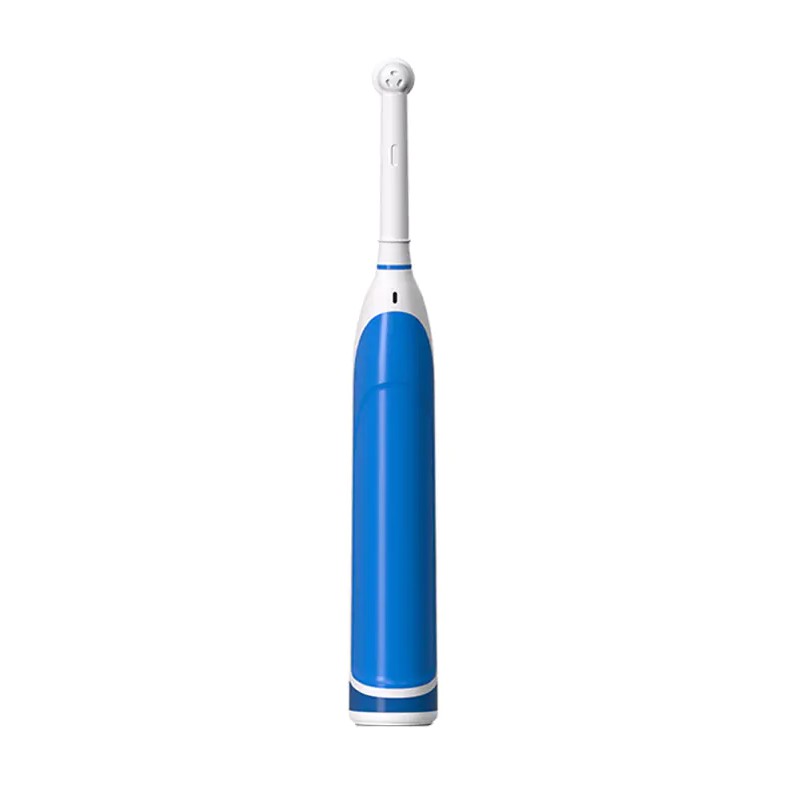
Phone:+86-13952799285
An adult electric toothbrush looks simple on a product page: one handle, one head, one charging base. The differences show up later, when the bristles splay in six weeks, the handle needs charging every second day, or your gums feel raw after two minutes instead of clean.
The short answer first. For most adults brushing twice a day, an oscillating rechargeable brush with soft bristles, a pressure sensor and a two minute timer covers daily plaque control reliably. A sonic brush is a close second and often the better pick if you dislike the feel of a rotating head. Battery powered handles make sense mainly for travel, a second bathroom or a backup. The rest of this guide explains the reasoning and the specifications worth checking before you pay.
Content
Start With the Cleaning Action, Not the Price
Adult electric toothbrushes rely on two mainstream drive systems. The choice affects how the brush feels in your hand more than the price does.
Oscillating brushes, often called rotary, use a small round head that turns back and forth at speed. Common adult models run at roughly 6,000 oscillations per minute, sometimes combined with pulsing to break up plaque. The compact head reaches the last molar easily, and the motion is easy to feel against the tooth surface.
Sonic brushes vibrate the bristles at high frequency, with some adult models reaching 33,000 vibrations per minute. Bristle travel is smaller, so the sensation is lighter and the sound is a steady hum rather than a mechanical whir. Sonic heads are usually oval, which covers more surface per stroke but needs more attention at the gum line.
| Feature | Oscillating drive | Sonic drive |
|---|---|---|
| Head shape | Small round head | Slim oval head |
| Motion | Head rotates back and forth, often with pulses | Bristles vibrate at high frequency |
| Typical frequency | About 6,000 oscillations per minute | Up to 33,000 vibrations per minute |
| Feel | Firm, mechanical, easy to place tooth by tooth | Light, buzzing, easy to glide along the arch |
| Coverage per stroke | Smaller | Larger |
| Water resistance range | IPX4 to IPX7 | IPX4 to IPX7 |
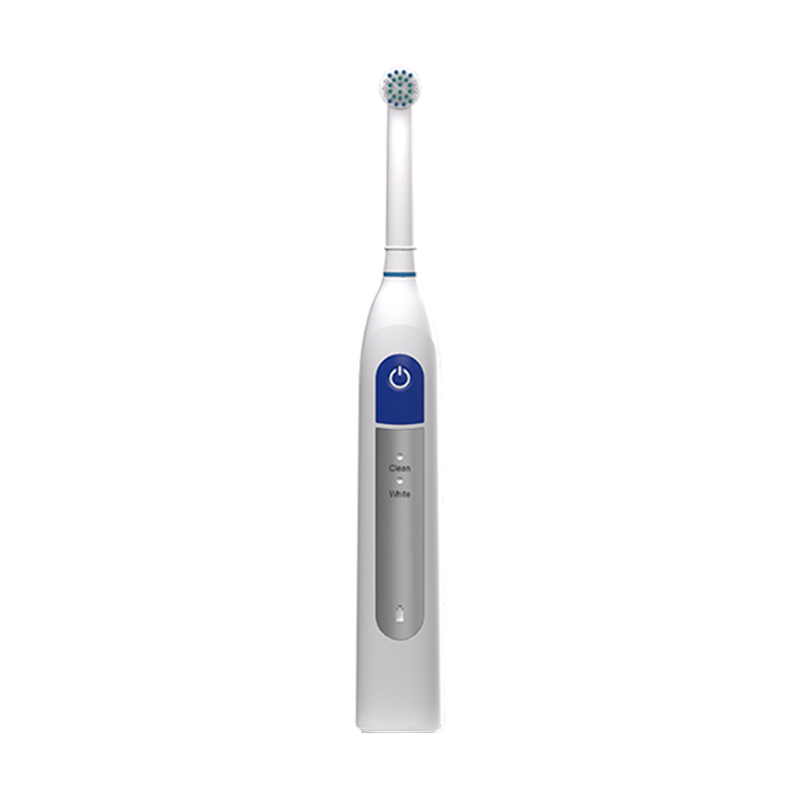
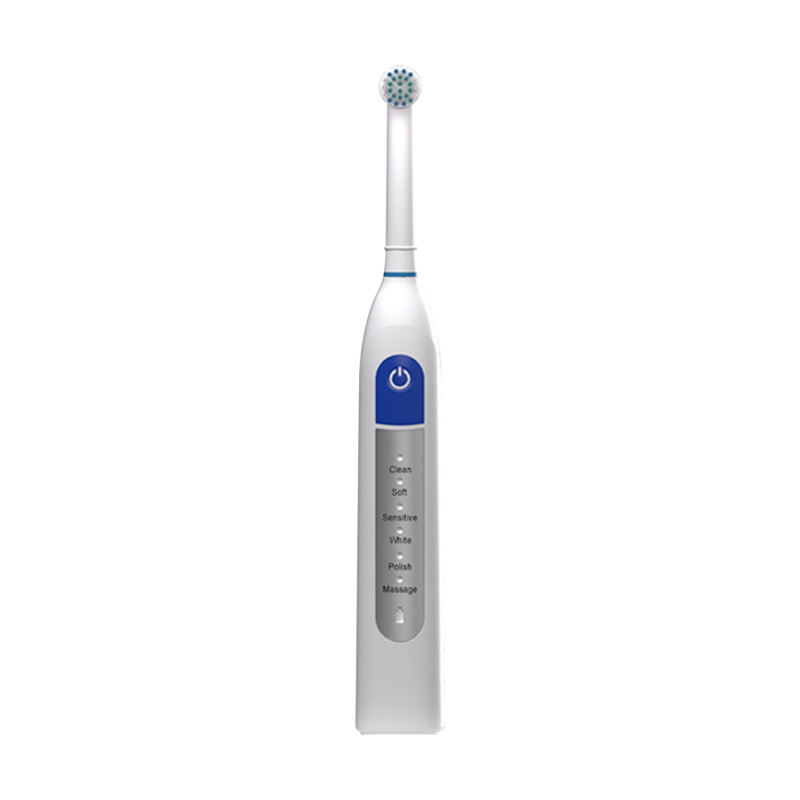
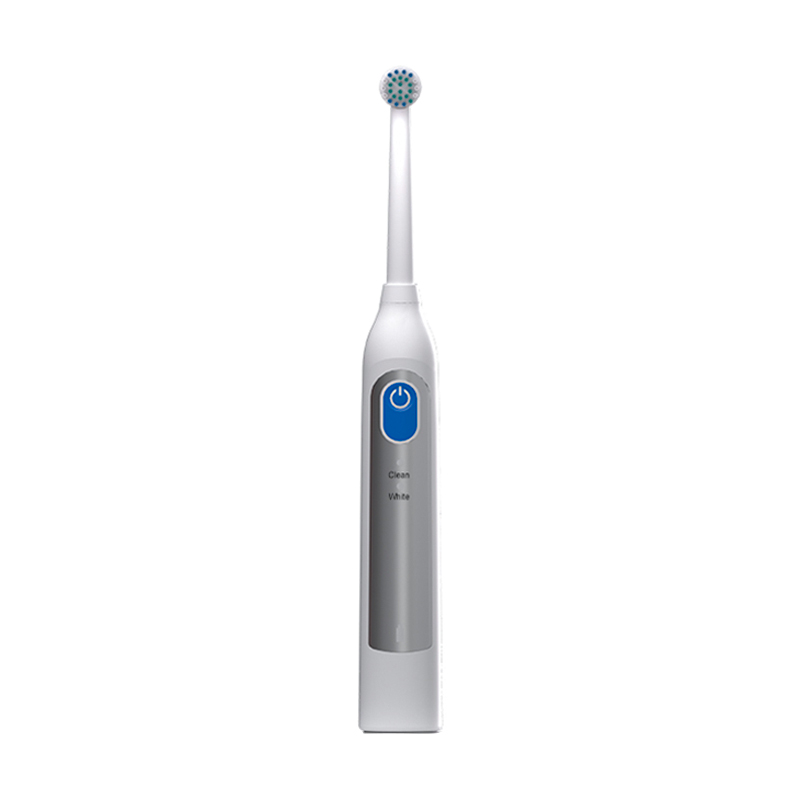
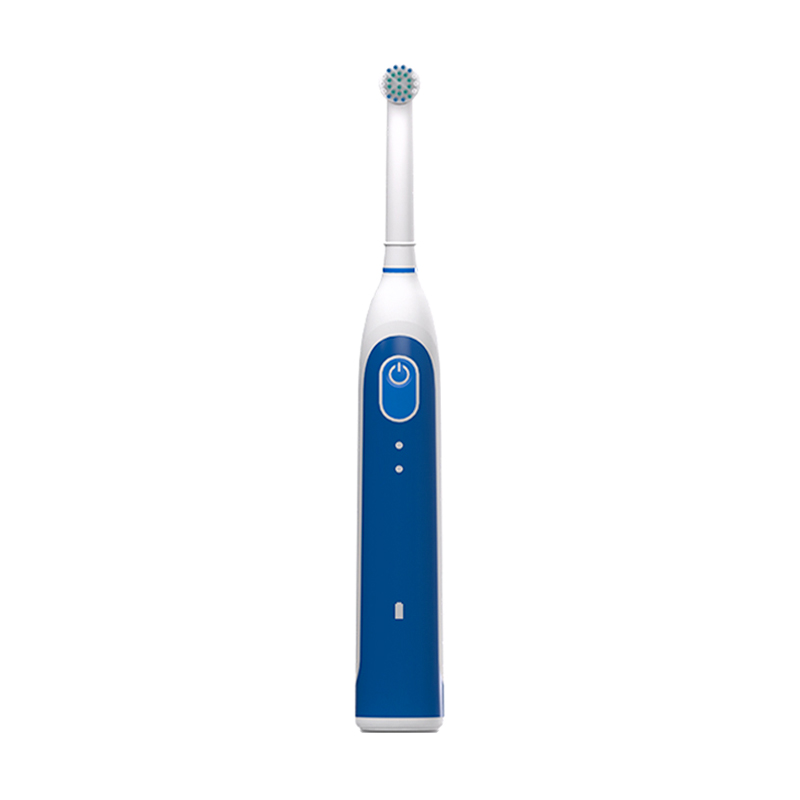
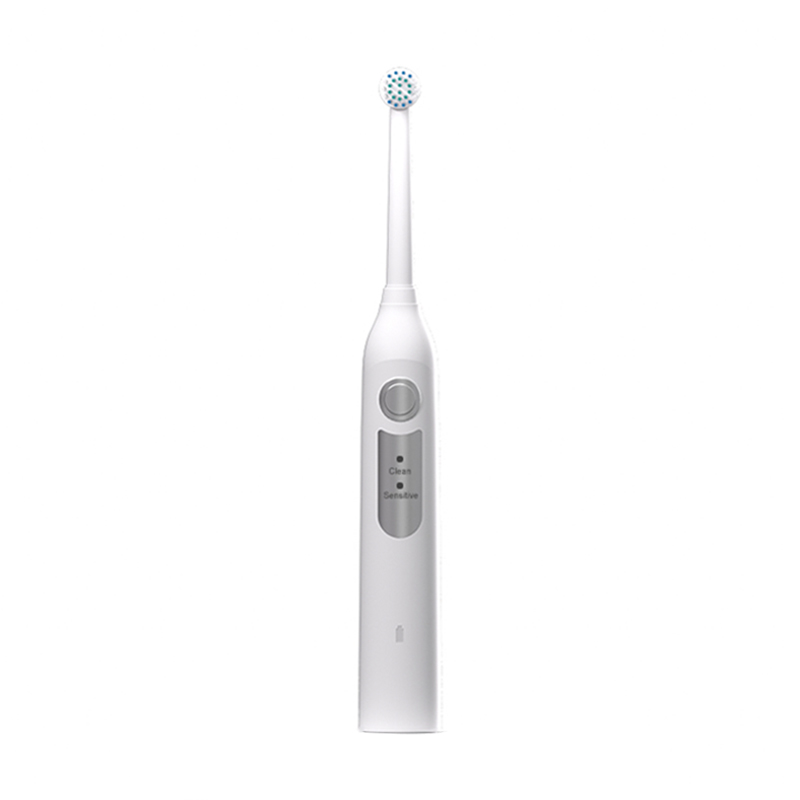
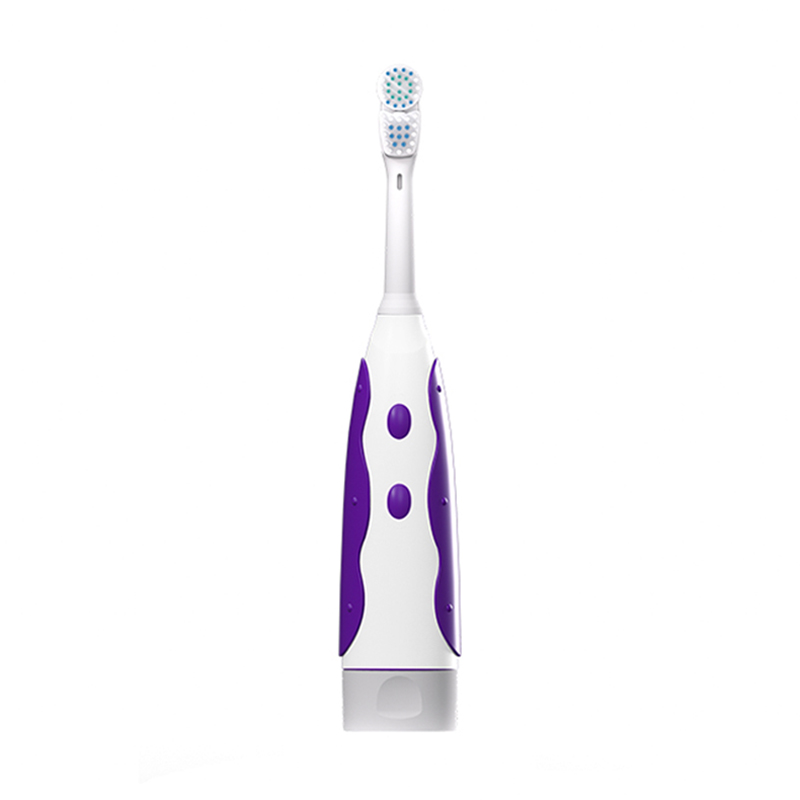
Both systems reach the same end point when technique is decent, so the decision usually comes down to comfort. Aolbea, a Ningbo based oral care manufacturer that has produced toothbrushes since 1986, builds both drive types, and its oscillating rechargeable range includes adult handles with intelligent timing, pressure control and IPX7 sealing, which is the specification level to look for if you rinse the handle under a running tap.
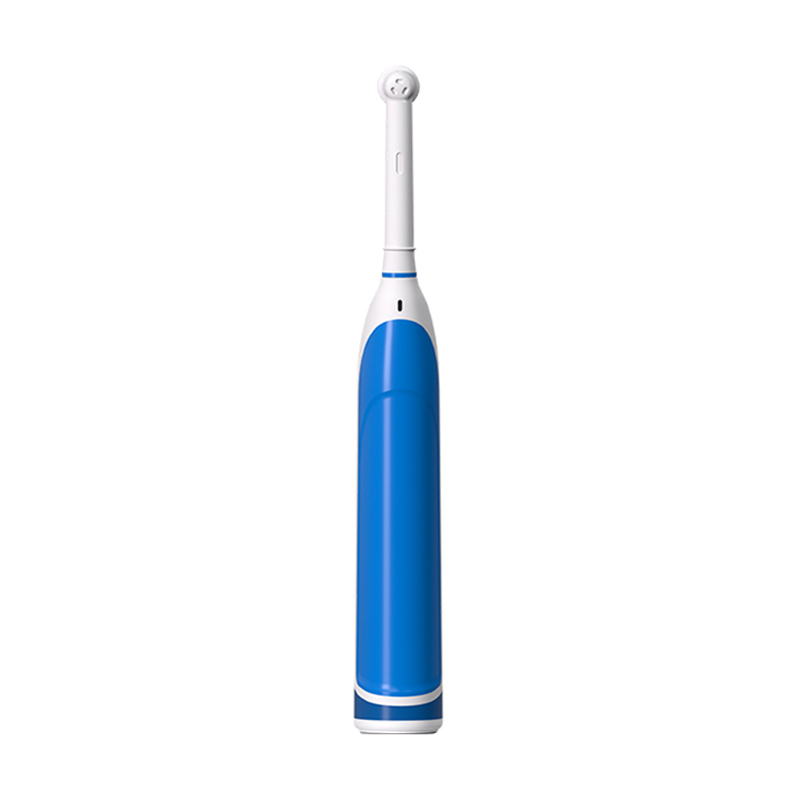 ALB-920 Smart Oscillating Adult Rechargeable Electric Toothbrush IPX7blue,green,customized colorView Product →
Match the Brush Head to Your Gums, Not to the Marketing
The head and bristles decide whether brushing still feels comfortable months after purchase. Four details matter more than the number of cleaning modes.
- Bristle softness. Soft and extra soft filaments suit adults with sensitivity, receding gums or a history of bleeding while brushing. Medium suits most other adults. Firm bristles are rarely a good idea.
- Filament density and tip finishing. Densely planted fine filaments clean the gum line and the gaps between teeth better than sparse stiff tufts, and rounded tips reduce the scratching that shows up as tenderness the next morning.
- Head size. A small head reaches wisdom teeth and the inside of the lower front teeth without forcing your jaw open. A wide head covers more surface per stroke but asks for more care near the gum line.
- Pressure feedback. A pressure sensor warns you when you push too hard. If you scrub when you are in a hurry, this is the one feature worth paying extra for.
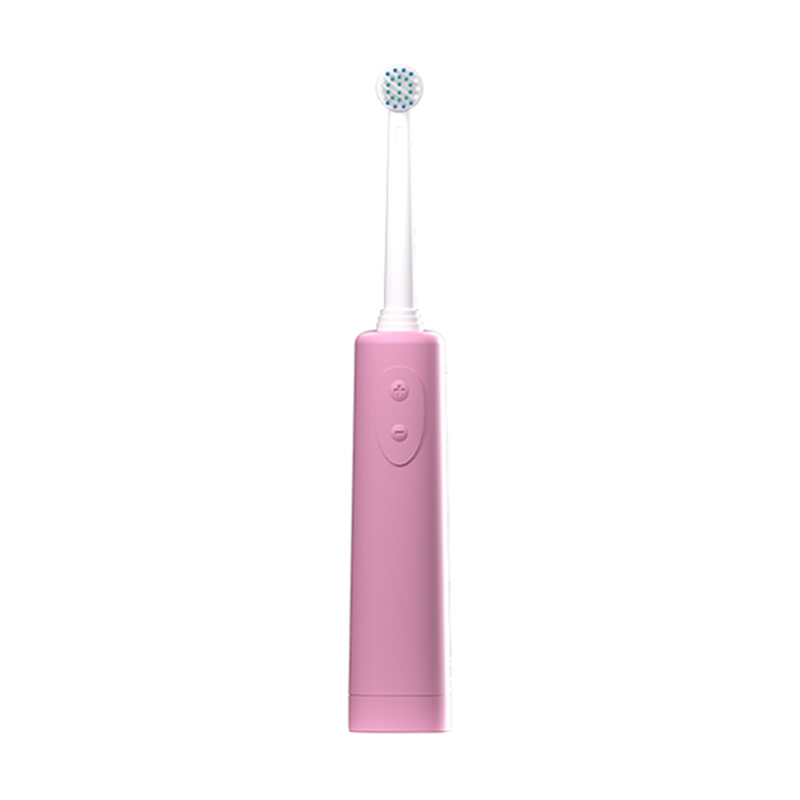
For adults with sensitive teeth or gums that bleed easily, the practical combination is a soft densely planted head, a low intensity mode and pressure feedback that signals before the bristles dig in. The drive type matters less here than the head and the pressure you apply. Sonic rechargeable handles suit this group well because the light bristle travel is easy to tolerate, especially when the brush is built around soft filaments, cleaning efficiency and USB charging.
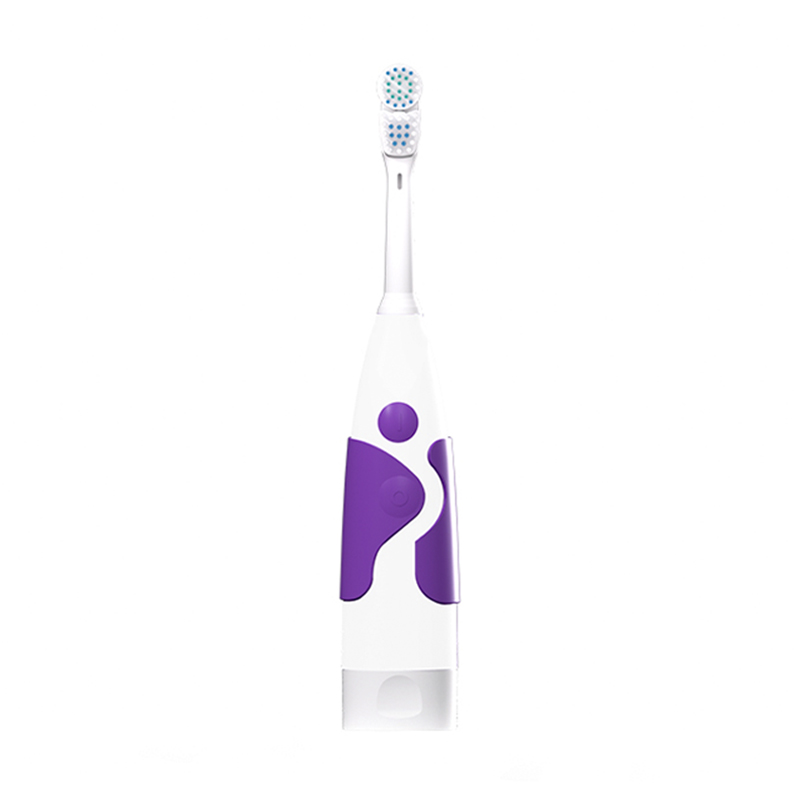
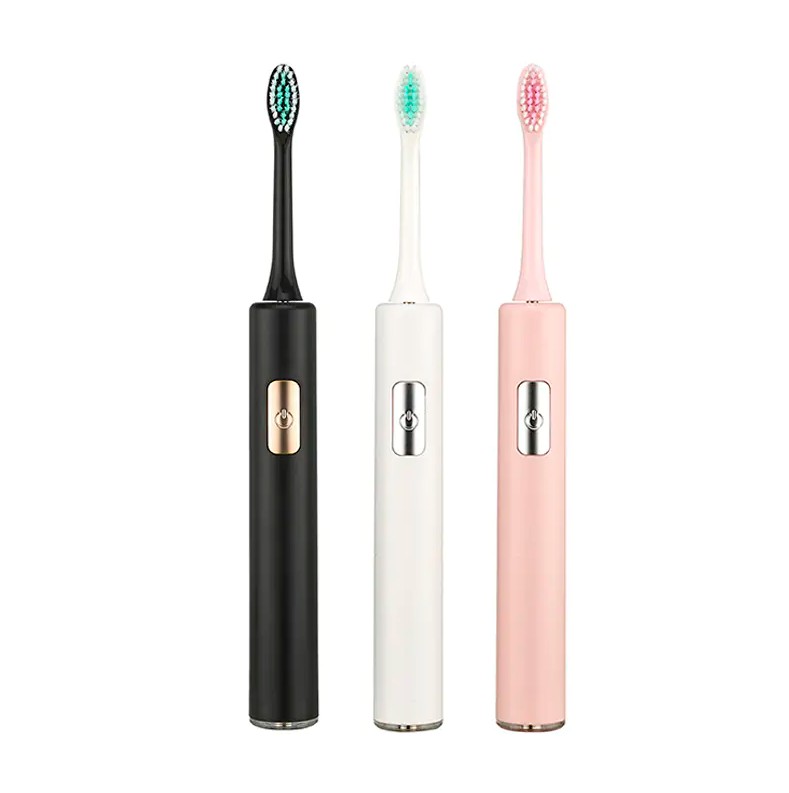
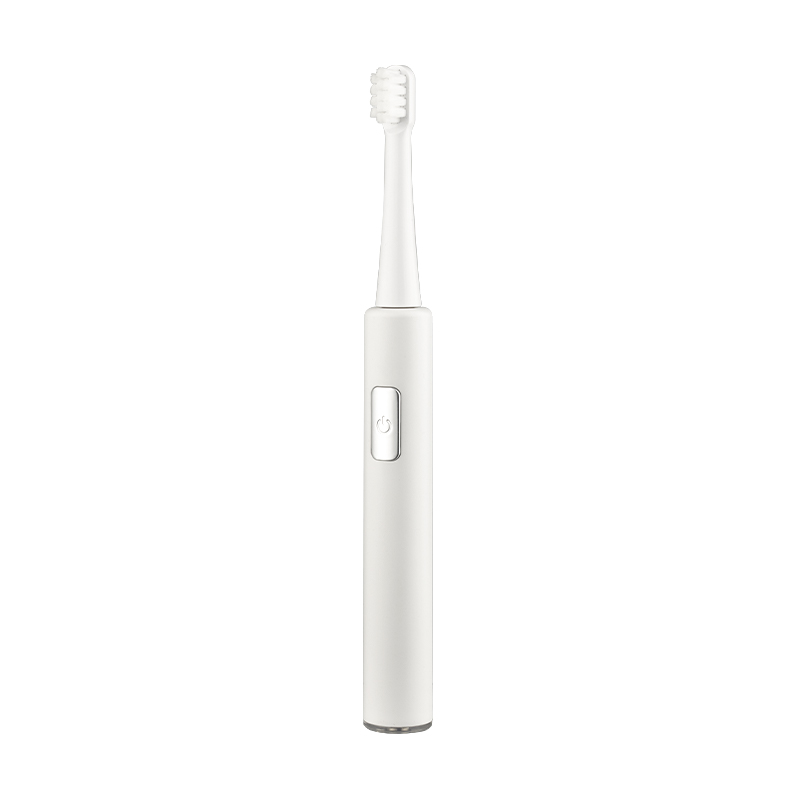 ALB-969 Adult USB Rechargeable Sonic Electric Toothbrush Soft And Cleaningwhite,pink,black,customized colorView Product →
Choose the Power Source Around Your Bathroom
Rechargeable and battery powered handles clean comparably. They differ in how you live with them.
Rechargeable handles
- Charging by inductive base or USB cable, with no battery changes.
- Sealed bodies commonly rated IPX7, so brief immersion in the sink is not an emergency.
- Runtime measured in weeks. Two weeks per charge is the practical floor for twice daily brushing, and long standby designs exist for frequent travellers.
- Higher upfront cost, but running costs are usually limited to replacement heads.
Battery powered handles
- Powered by replaceable cells, so no charging base occupies counter space.
- Useful as a travel brush or a second handle in a guest bathroom.
- Lighter, and usually rated IPX4, which handles splashes but not immersion.
- Power tapers as the cells drain, and batteries add up over a year.
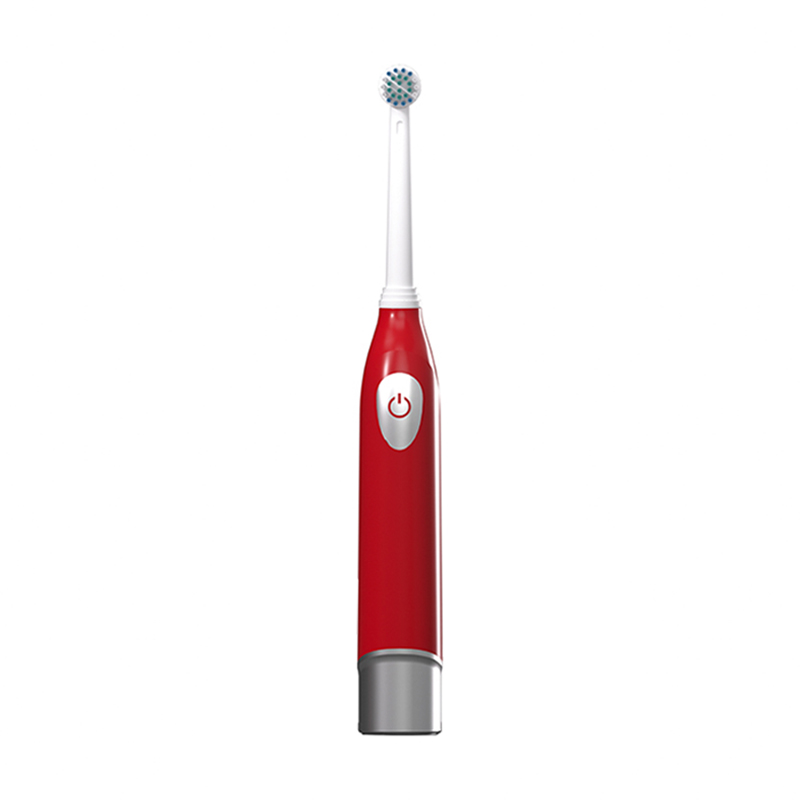
The simple rule: if the brush lives on your counter, buy rechargeable. If it lives in a wash bag, a battery powered adult model is easier to keep ready, and a sonic handle with a travel box is a practical option for short trips.
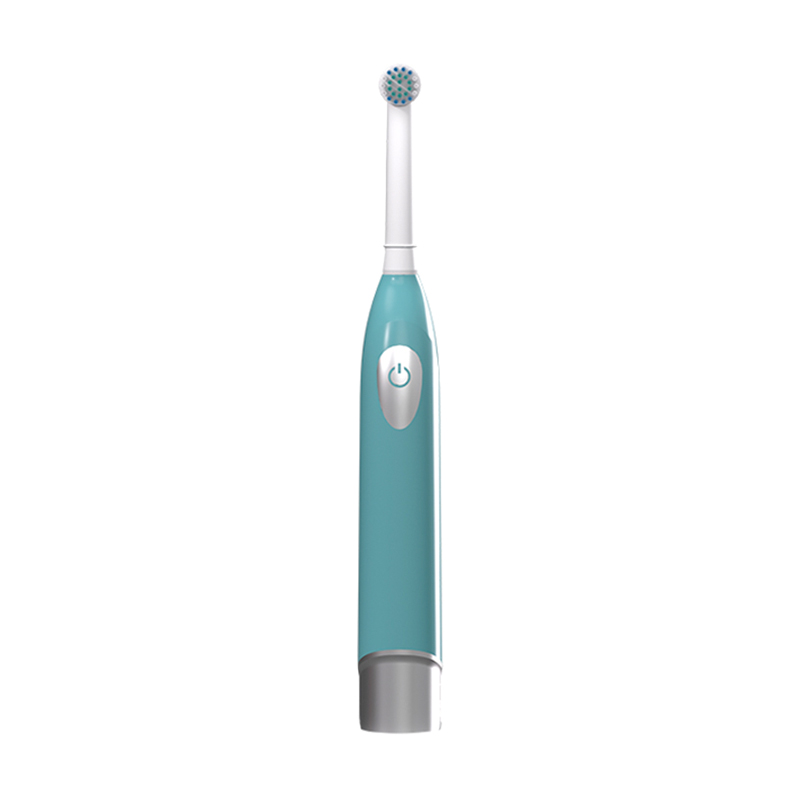
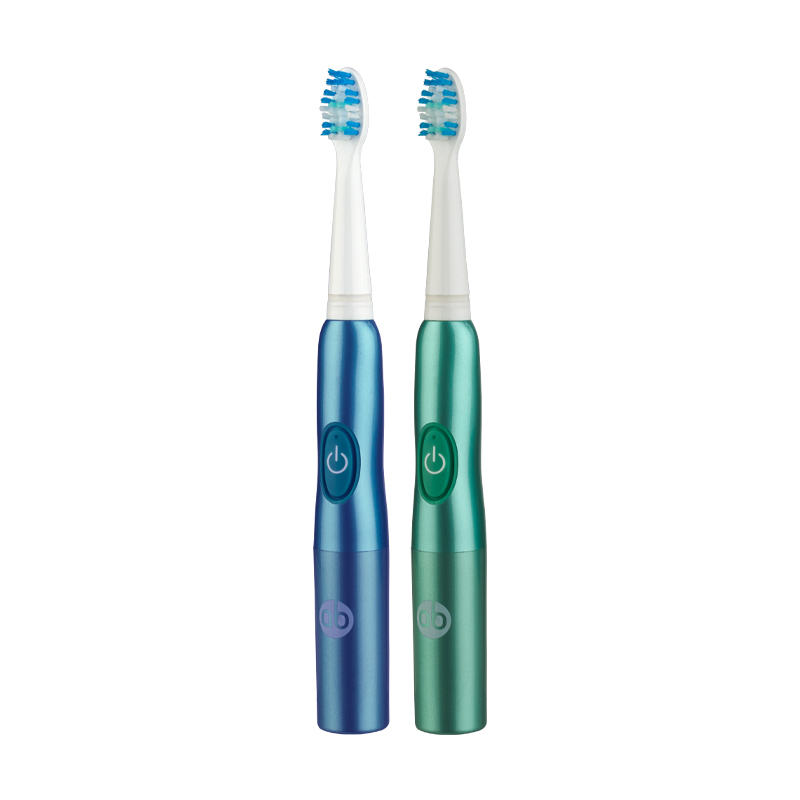 ALB-3022Alb-3022 Sonic Battery Powered Electric Toothbrush Adultred,green,blue,customized colorView Product →
The Specifications Worth Checking Before You Pay
Ignore the mode count on the front of the box and check these items instead.
| Specification | What to look for | Why it matters |
|---|---|---|
| Timer | Two minutes with 30 second intervals | Spreads brushing time across all four quadrants |
| Pressure sensor | Visible light or vibration warning | Reduces gum recession linked to hard brushing |
| Water resistance | IPX4 minimum, IPX7 preferred | IPX4 handles splashes, IPX7 tolerates brief immersion |
| Runtime per charge | 14 days minimum | Fewer charging interruptions and a better battery habit |
| Head cost and stock | Price per head and steady availability | Heads are the real running cost over three years |
Two specifications are easy to overlook. Brush head availability decides what the brush costs you over three years, not the handle price. Handle weight decides whether you keep the brush moving instead of parking it against one tooth.
Technique Decides More Than the Motor
An electric brush removes most of the effort, which means most of the damage comes from pressure. Hold the head at roughly 45 degrees to the gum line, move it slowly from tooth to tooth and let the motor work. Two minutes, twice a day, light pressure.
After brushing, rinse the head, shake off the water and store the handle upright with the head uncovered so it can dry. Replace the head every three months, or sooner if the filaments have splayed, because bent bristles clean poorly and irritate the gum line. For a step by step walkthrough, see this guide on how to use an electric toothbrush without wearing down enamel.
Questions Adults Ask Before Buying
Is an oscillating brush or a sonic brush better for sensitive teeth?
Neither drive is automatically gentler. Comfort comes from soft densely planted bristles, a light touch and pressure feedback. If a rotary head feels too intense, a soft headed sonic handle at a low setting is a reasonable alternative.
How often should an adult replace the brush head?
Every three months for most people, and sooner if the filaments look bent or splayed. A worn head cleans less thoroughly and presses unevenly along the gum line.
Does a rechargeable handle last longer than a battery powered one?
The handle usually outlasts the bristles by years in both cases. Rechargeable models avoid repeated battery purchases, while battery models pack more easily. The head is the part that wears out first.
Is IPX4 water resistance enough for bathroom use?
IPX4 handles splashes from rinsing and wet hands. If you rinse the whole handle under a tap or occasionally drop it into a basin of water, an IPX7 rating is the safer specification.
Buying an electric toothbrush for adult daily use does not need a long comparison list. Decide on the drive that feels comfortable, choose a head with soft densely planted bristles, pick the power source that fits where the brush will live, and confirm the timer, pressure sensor, water resistance rating and head price. Those checks separate a brush you keep for years from one that ends up in a drawer.
Aolbea has manufactured oral care products in Yuyao, Ningbo since 1986, and states that it now offers more than 30 series and close to 100 models of manual and electric toothbrushes, including adult oscillating and sonic handles in rechargeable and battery powered versions. The company also states that it has taken part in drafting and revising national and industry standards, among them the Electric Toothbrush standard and the Green Design Product Evaluation Technical Specification for Electric Toothbrushes, and that it holds more than 130 patents. Those claims are the company's own. What you can verify from the handle in your hand is whether the bristles stay comfortable, the timer holds you to two minutes, and replacement heads remain easy to buy.