
 English
 中文简体
中文简体
Phone:+86-13952799285
Manual toothbrushes remain the preferred choice for hundreds of millions of people worldwide in daily oral care. Faced with a dazzling array of products on supermarket shelves or e-commerce platforms, many consumers wonder: should they choose soft, medium, or hard bristles?
In fact, the hardness of the bristles on a manual toothbrush directly affects cleaning effectiveness and gum health. Choosing the wrong bristles can not only fail to effectively clean teeth but may also lead to gum recession or enamel damage.
Content
1. Soft-bristled manual toothbrushes: The gentle yet effective "all-rounder"
Suitable for: People with sensitive gums, pregnant women, the elderly, and those undergoing orthodontic treatment
Soft bristles are currently the most common type of manual toothbrush on the market. Their bristle diameter is typically between 0.15mm and 0.18mm, with a soft texture and delicate feel.
Advantages: Soft bristles can reach deep into the periodontal pockets (gum folds) for cleaning without causing mechanical damage to the delicate gum tissue.
Recommendations: 1. Soft-bristled manual toothbrush: If you experience bleeding gums or are currently undergoing fillings or orthodontic treatment, choosing a soft-bristled manual toothbrush with a high rounded bristle ratio is the best choice for oral hygiene.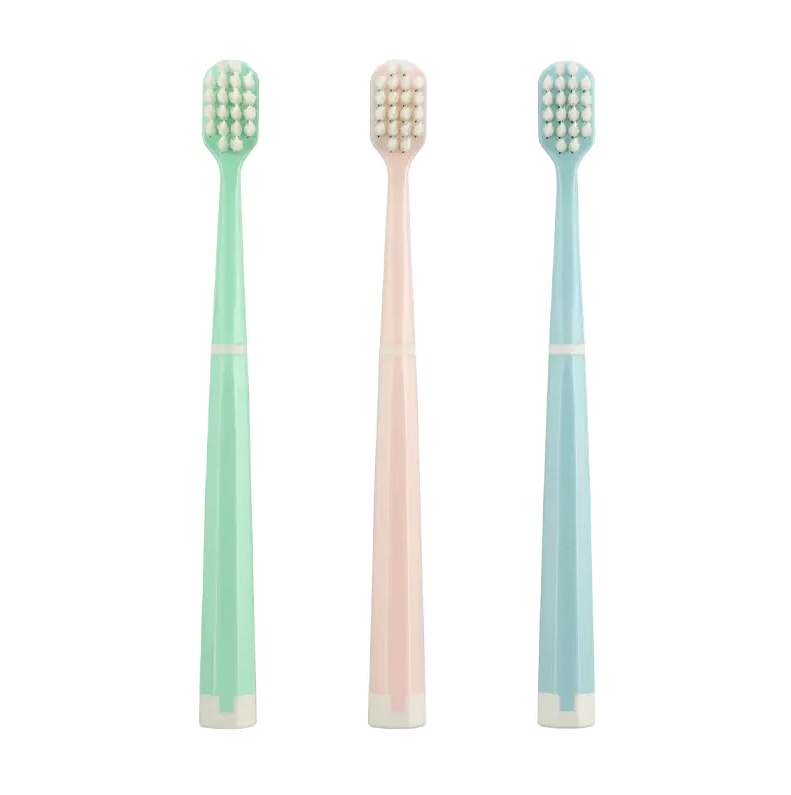
2. Medium-bristled manual toothbrush: A powerful cleaner
Suitable for: People with good oral health who require a strong cleaning feel.
Medium-bristled brushes have stronger resilience and faster rebound, generating greater friction to remove stubborn plaque.
Advantages: For those without tooth sensitivity and who frequently consume highly pigmented foods (such as coffee and tea), medium-bristled manual toothbrushes are particularly effective at removing stains.
Recommendations: When using a medium-bristled brush, pay extra attention to the brushing pressure to avoid excessive force that could wear down tooth enamel.
3. Hard-bristled manual toothbrush: A precise tool for specific needs
Suitable for: Smokers, denture cleaning, or those with long-term tooth discoloration.
While hard-bristled manual toothbrushes are less commonly used as everyday tools due to increased awareness of oral hygiene, they remain irreplaceable in certain areas.
Advantages: Strong physical friction effectively removes years of accumulated tobacco and betel nut stains.
Recommendations: Unless advised by a dentist, it is not recommended for the average person to use a hard-bristled brush for long-term tooth cleaning. Hard-bristled brushes are often used to clean dentures or removable prostheses.
How to Choose a High-Quality Manual Toothbrush?
Besides bristle hardness, consider the following key factors when purchasing a manual toothbrush:
- Rounding: High-quality manufacturers precision-polish the bristle tips to create a rounded shape, minimizing irritation to the oral mucosa.
- Brush Head Size: It is recommended to choose a small brush head for flexible movement in the confined space of the mouth.
- Handle Grip: A non-slip handle ensures precise control of the brushing angle even when wet.
Choosing a manual toothbrush is not about "the harder the better" or "the softer the more expensive," but rather about finding one that suits your oral health. For most people, a hand toothbrush with medium or soft bristles combined with the correct Bass brushing technique is sufficient to maintain oral freshness and health.