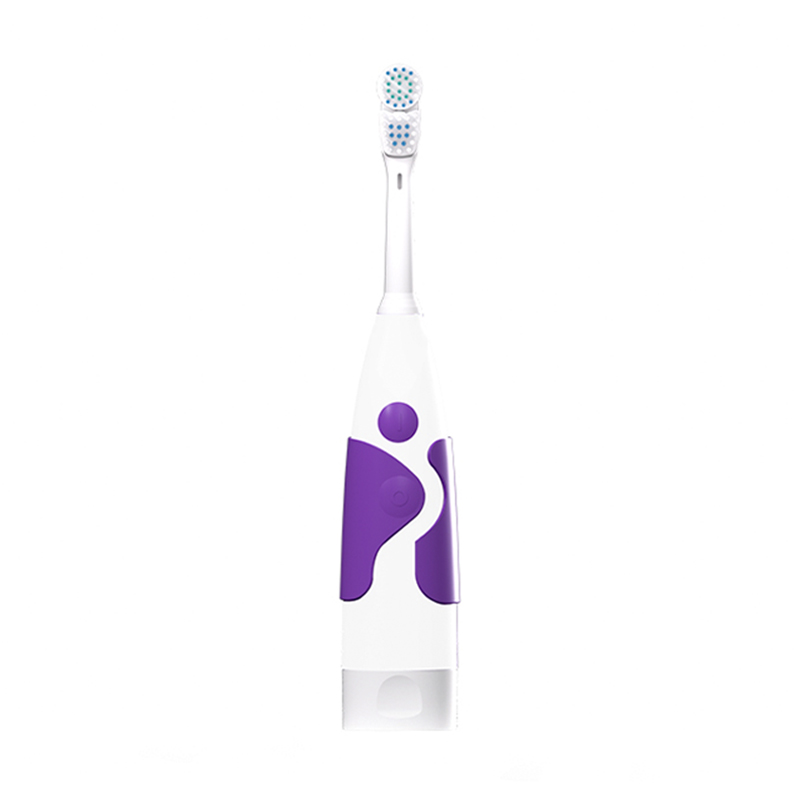
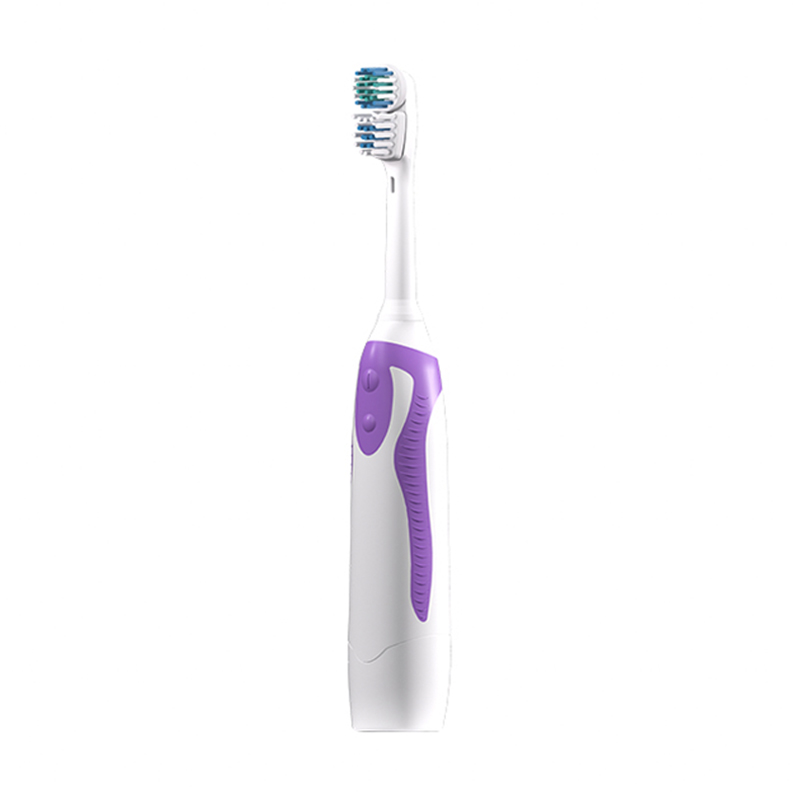
English
 中文简体
中文简体Phone:+86-13952799285

language

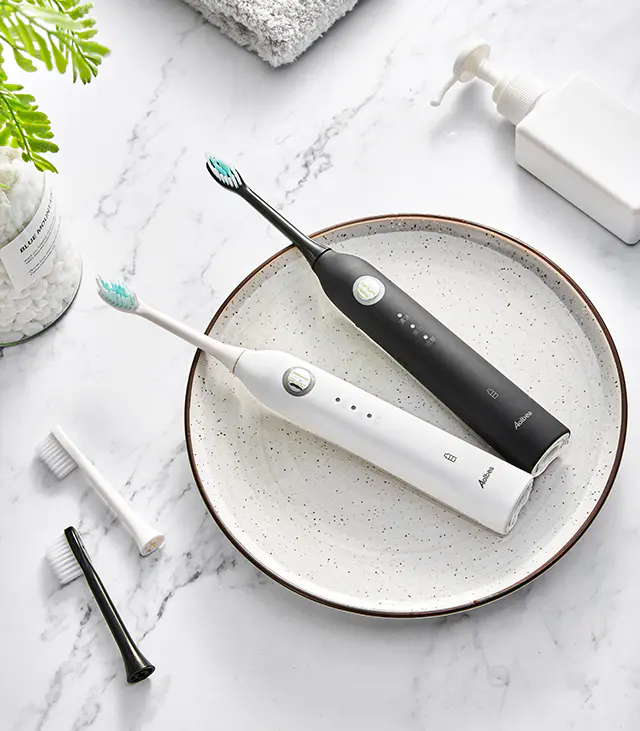

Founded in 1986, our company has developed from an early factory specializing in the R&D and plastic mold design and manufacturing of toothbrushes and healthcare products to a global oral care products supplier that currently integrates the R&D, production and sales of oral products such as manual toothbrushes, electric toothbrushes, interdental brushes and dental floss, etc. After nearly 30 years of continuous accumulation and innovation, the company has become one of the largest professional one of the electric toothbrush manufacturing enterprises. OEM Oscillating Battery-powered Toothbrush Manufacturers and Wholesale Oscillating Battery-powered Toothbrush Factory in China.
Firmly adhering to the corporate mission of "focusing on new technology of healthy dental care and promoting sustainable development of human oral health", our company has been committed to in-depth research and development of oral care product technology. At present, the company mainly produces and sells all kinds of children's smart toothbrushes, children's electric toothbrushes; adult electric toothbrushes, adult electric cleaning equipment, breathing patent toothbrushes and other more than 30 series of products, nearly 100 models, with independent intellectual property rights of various patents more than 130, in the electric toothbrush industry in a leading position. It is a national high-tech enterprise. Meanwhile, various products are exported to more than 100 countries and regions in the world's five continents, and have won good reputation from customers at home and abroad. Supply Wholesale Oscillating Battery-powered Toothbrush. In the world and in China, more and more people are choosing Orbea. Over the past 30 years, Orbea has been steadily developing its product quality and service.
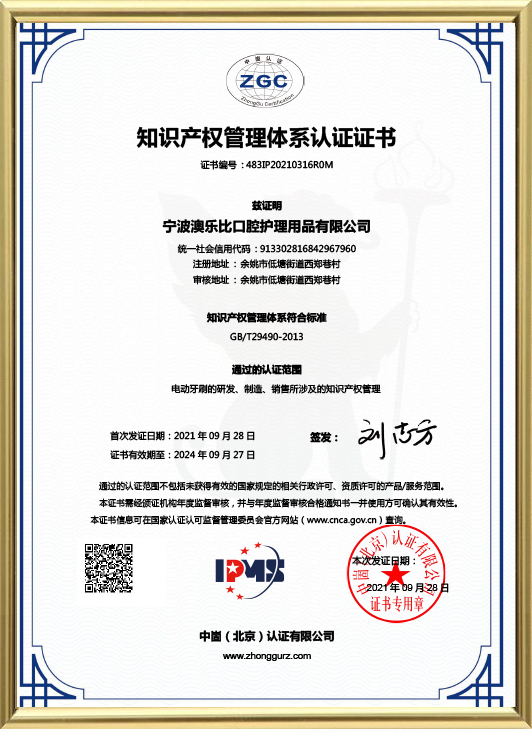
If something wears out over time, you can find the right product here. Continue to provide worry-free product supply to every customer.
An Oscillating Battery-powered Toothbrush works by rotating the brush head back and forth in small, rapid bursts to loosen debris along the gum line and between teeth. The core value of this design comes from three measurable factors: oscillation speed, the length of time a standard battery pack lasts, and how evenly the brush head covers the tooth surface during a normal session. Readers who understand these three factors can compare products more confidently instead of relying on general impressions. The sections below walk through oscillation speed data, battery discharge patterns, plaque removal progress over a month, and an overall feature comparison. Practical guidance on head coverage, manufacturing background, and battery care follows afterward.
Oscillation speed is typically measured in oscillations per minute (OPM), and it varies noticeably across product tiers within this category. Basic models generally operate around 2,500 OPM, standard models tend to sit near 5,000 OPM, and advanced models can reach approximately 7,600 OPM. A higher oscillation count generally means the brush head completes more back-and-forth rotations within the same two-minute session, which can help reach tighter spaces between teeth. This does not automatically make a brush better for every user, since some people find very high oscillation counts less comfortable on sensitive gums. The horizontal bar chart below compares typical oscillation speeds across the three tiers described here, based on publicly available technical listings for oscillating-rotating toothbrush models, 2024.
The difference between the basic and advanced tiers is more than threefold in raw oscillation count, which is a substantial gap when comparing everyday performance. An Oscillating Battery-powered Toothbrush positioned in the advanced tier usually pairs a higher oscillation count with a smaller, rounded brush head so that the increased motion stays comfortable against the gum line. Users transitioning from manual brushing often start with a standard-tier oscillation speed before moving to a higher setting once they are accustomed to the sensation. It is worth noting that oscillation speed works together with head size and bristle stiffness, so a single number should not be read in isolation. Overall, this data offers a useful benchmark, and it becomes more meaningful when paired with the plaque removal figures discussed later in this article.
Because this category of toothbrush is powered by replaceable batteries rather than an internal rechargeable cell, battery life is commonly expressed in weeks of use per battery set. Using two standard AA alkaline batteries and a typical usage pattern of two two-minute sessions per day, a fresh battery set generally lasts around four weeks before power output drops enough to noticeably slow the oscillation. The decline is not perfectly linear, since alkaline batteries tend to hold voltage fairly steadily for the first two to three weeks before a faster drop-off near depletion. This pattern is well documented in general alkaline battery discharge research, and it applies similarly to this toothbrush category. The line chart below shows a representative four-week discharge curve for a fresh set of AA batteries.
The curve stays relatively flat through the first two weeks and then drops more sharply heading into week four, which matches the general behavior of alkaline cells under moderate, repeated load. This means the final few days of a battery set are the point where a noticeable difference in oscillation force is most likely to be felt. Keeping a spare set of batteries on hand around the three-week mark can help avoid an unexpected interruption to a regular brushing routine. Some users choose rechargeable AA cells as an alternative, though these often have a slightly different discharge shape and a lower total voltage than fresh alkaline batteries. Either way, checking battery performance periodically is a simple habit that keeps the oscillation speed closer to its intended level.
Comparing plaque removal progress between manual brushing and oscillating brush technique over a four-week window highlights how much of the benefit builds up gradually rather than appearing immediately. Representative figures show a 38 percent improvement in week one, increasing to 50 percent in week two, 60 percent in week three, and 65 percent by week four, measured relative to a manual brushing baseline. This progression suggests that the rotating motion becomes more effective as users adapt their brushing angle to the smaller, round head shape common in this category. The column chart below presents this four-week progression.
The gradual climb across four weeks indicates that a fair trial period matters more than a first impression when judging this type of brush. Users switching from manual brushing sometimes apply too much pressure in the first week, which can reduce effectiveness until they learn to let the rotating head do the work. By week three or four, brushing angle and pressure typically settle into a more efficient pattern, which lines up with the steeper improvement seen later in the chart. This kind of progressive data also suggests that short one-week product trials may understate the eventual benefit of consistent use. As always, individual outcomes depend on starting oral health, brushing frequency, and general dental hygiene habits.
A radar view of five practical dimensions helps summarize how this category performs as a whole rather than looking at any single metric in isolation. The dimensions rated below on a ten-point scale are torque, grip comfort, head coverage, portability, and durability. Torque and head coverage tend to score well in this category because the rotating-oscillating mechanism is built to apply consistent force across a small, round brushing surface. Portability is also generally strong, since battery-powered models do not require a charging base and travel easily in a bag. Durability and grip comfort vary more across specific designs, often depending on the quality of the internal gear mechanism and the texture of the handle material.
The shape of this polygon shows torque and portability pulling toward the outer edge, which is consistent with the oscillation speed and battery convenience data discussed earlier. Grip comfort sits slightly closer to the center, reflecting the fact that handle ergonomics vary more between designs than the underlying motor technology does. Head coverage benefits from the compact, round brush head typically used with this mechanism, since it can pivot into tighter areas near molars. Durability depends largely on the internal gear assembly, which is addressed in more detail in the manufacturing section below. Viewing all five dimensions together gives a more complete picture than focusing on oscillation speed or battery life alone.
The brush head on this category of toothbrush is generally smaller and rounder than a manual brush head, which allows it to pivot and reach curved tooth surfaces more directly. A compact head also makes it easier to angle the brush along the gum line without needing to change grip position repeatedly during a session. Handle design typically favors a straight, cylindrical shape with a textured grip band, since battery-powered handles tend to be slightly heavier at the base where the battery compartment sits. The table below summarizes common design elements found in this toothbrush category and their general purpose.
| Design Element | Typical Purpose |
| Round, compact head | Improves access to curved tooth surfaces |
| Textured grip band | Maintains control during rotation-driven vibration |
| Sealed battery compartment | Protects internal components from bathroom moisture |
| Indicator bristles | Signals when the brush head should be replaced |
Ningbo Huiho Cosmetics Packaging Co., Ltd. is based in Ningbo, Zhejiang Province, a region often described as the Venice of the East for its extensive canal network and long manufacturing heritage. The company is a professional manufacturer of large-scale daily cosmetics packaging in China, and its production experience extends into personal care devices, including models within the Oscillating Battery-powered Toothbrush category. Years of ongoing research, development, and process refinement have shaped a manufacturing approach that pays close attention to gear assembly precision and battery compartment sealing. This consistent attention to detail is part of why the company has built recognition and trust with merchants both domestically and abroad. The list below outlines core manufacturing focus areas relevant to this product category.
Replacing batteries at the first sign of reduced oscillation strength helps maintain consistent cleaning performance rather than waiting until the brush stops working entirely. It is generally advisable to remove batteries if the toothbrush will not be used for an extended period, since older alkaline cells can occasionally leak and affect the internal contacts. Wiping the battery compartment threads with a dry cloth during each battery change helps prevent corrosion from building up over time. Rinsing only the brush head and upper handle, while keeping the battery compartment seal dry and secure, helps protect the internal mechanism from moisture damage. Following a simple, regular battery-check routine is one of the most effective ways to keep this type of toothbrush performing as intended.
Under a typical two-session daily routine, a fresh set of AA alkaline batteries generally supports around four weeks of use before oscillation strength noticeably declines.
Rechargeable AA cells can generally be used, though their voltage and discharge pattern differ slightly from fresh alkaline batteries, which may affect oscillation strength.
Replacing the brush head roughly every three months, or sooner if the indicator bristles fade or bristles appear splayed, is a commonly recommended interval.
The upper handle and brush head of an Oscillating Battery-powered Toothbrush can generally be rinsed, but the sealed battery compartment should be kept dry to protect the internal contacts.
Relying on professional design, sophisticated mold manufacturing and advanced equipment, and perfect management, the company's various products are exported to more than 100 countries and regions on five continents.We are OEM Oscillating Battery-powered Toothbrush Factory.
 West Zhengxiang Village, Zhengxiang, Yuyao City, Zhejiang, China.
 +86-13952799285/+86-574-62291690
 +86-574-62294590